


Hypoid gear
Release time:
Feb 20,2025
Hypoid gear is a special type of gear that plays an indispensable role in many mechanical transmission fields.
1. Structural features
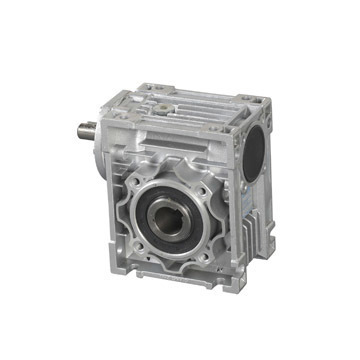
The tooth surface of the hypoid gear is a complex curved surface shape. Its axes are neither parallel nor intersecting. This unique structure makes it more flexible in spatial layout. Compared with traditional cylindrical gears, the hypoid gear can achieve a larger transmission ratio change in a smaller space. Its gear teeth are spiral, and this spiral tooth shape helps to achieve smooth and continuous power transmission during the transmission process and reduce shock and vibration.
2. Performance advantages
High transmission ratio
It can achieve a larger transmission ratio. For example, in the rear axle transmission system of a car, the high-speed and small torque of the engine can be easily converted into the low-speed and large torque required by the rear wheels through the hypoid gear to meet the needs of vehicle driving.
Strong load-bearing capacity
Due to its special tooth shape and meshing method, the hypoid gear can withstand a large load. In heavy machinery such as mining machinery, construction machinery and other equipment, it can stably transmit power to ensure the normal operation of the equipment.
High transmission efficiency
Under normal working conditions, the transmission efficiency of the hypoid gear can reach a relatively ideal value, effectively reducing the loss of energy in the transmission process.
3. Application fields
Automotive industry
It is a key component in the rear axle differential of the car. Almost all modern cars use hypoid gear to achieve power transmission and distribution.
Industrial equipment
In various industrial transmission devices, machine tools and other equipment, hypoid gear is widely used in transmission links that need to change speed and torque.
With its unique structure and excellent performance, the hypoid gear shines in many fields and continuously promotes the development and progress of mechanical transmission technology.

OFFICIAL WEBSITE

Copyright © 2023 FOSHAN NANHAI ZHUJIANG REDUCTION GEAR CO.,LTD